
ARTICLE
How financial institutions can build resilient payment operations that are ready for the future
7 July 2023
Defining payment operations resilience
Payment and electronic money institutions all share one promise they build upon: facilitating payments for their customers. Fulfilling that promise requires the utmost reliability. All software and services buyers will demand reliability from their vendors.
But some software and services are more critical than others for their customers. When it comes to facilitating payments, sometimes being the single means of payment for your customers, any downtime can have a critical impact on people’s real life and the trust they have in their business partners.
To cover how regulated fintech companies apprehended that challenge and ensured resilience in their payment operations, we’ve invited payment companies' product and business leaders to a webinar about building resilient payment operations.
Payments should be invisible
Our guests all build payment products, for which any operational issue can have severe reputational repercussions and real-life consequences for businesses and individuals, as discussed above.
Nirav leads Andaria, a UK and EU-regulated fintech company providing non-financial businesses with payment accounts augmented with multi-currency capabilities, virtual IBANs and more, with the aim of increasing business banking inclusivity.
Dimitri is Chief Product Office for iBanFirst. Based in Brussels, Belgium but operating in more than 10 countries across Europe, iBanFirst enables SMEs to go global by facilitating cross-border payments and FX for use cases such as goods import and export and international retail.
Dan oversees the core banking system of TrueLayer, a company that started with open banking and quickly expanded to provide merchants with online accounts-powered payment services.
As we can see, it is in these companies’ mission to make payments just work, so their customers can focus on their core products and services. For any non-financial business, while being critical to the lifeline of the companies, payments should remain in the background, almost invisible, embedded.
And to remain invisible, payments should not break.
What is payment resilience?
Preventing payments from breaking requires building resilience in payments. But how to define payment resilience? Which metrics to track?
Again, the goal is to make payments invisible. So what makes payments invisible?
First, they should obviously work, meaning that whenever a customer sends a payment, this payment should arrive to the bank of its beneficiary. Many steps of payment, internal or external to the payment company, can go wrong. But payment companies keep an overall view of payment success rate, with a specific threshold they aim at maintaining.
When incidents affecting the platform's overall capacity to send and receive payments happen, again, whether internal or external, recovery should happen as fast as possible. Payment companies' infrastructures are built in that sense, and the overall uptime of these platforms is a key indicator.
To be invisible, a payment should also be fast. There are two aspects to consider here. Depending on the payment rail and method, a specific payment will take more or less time to be executed. Think about your classic bank transfers compared to instant bank transfers. Payment companies ensure that any payment initiated through their services respects the promised payment speed. An “instant” payment shouldn’t take more than a few seconds, a classic one more than a few days.
Independently from the payment rail and methods, customers want to know as fast as possible if their payment has been accepted, processed and sent by the payment company, so they can know they can peacefully wait for the payment to be received by their counterpart – or see that their instant payment has been instantly executed.
Payment and electronic money institutions, therefore, monitor the processing speed of their payments.
These metrics sound very backend oriented, linked to processes happening under the hood of payment products. They do, but they also directly affect the end users of these services and their experience. As such, companies consider them as critical factors of their customer experience, and build their entire product and infrastructure around them, with the goal of maintaining the best customer experience, even if major incidents happen in the background.
What can break in payment systems?
The short and scary answer is everything. As mentioned above, many steps, internal and external to the payment company, are involved in successfully executing a payment. In our webinar, our panellists broke down those steps into three main categories.
The case of counterparty availability
The first breaking point mentioned by our panellists was, surprisingly, the counterparty banks. When sending an account-to-account bank payment, this payment has to be received by the counterparty (the beneficiary of the payment, the “payee”)’s bank. Most payment schemes, such as SEPA instant credit transfer, require the receiving bank to acknowledge the incoming payment and accept (or refuse) it within a defined timeframe.
And these counterparty banks actually happen to be unavailable frequently enough that this counterparty availability challenge is top of mind for payment companies. The frequency of this issue depends on the geography and type of counterparty banks, with smaller banks or local branches of larger banks being more often impacted than tier 1 banks.
A specific unavailability issue comes from SEPA instant credit transfers, which aren’t mandatory for banks to support as of today, both as senders and receivers, but will soon be. As a result, even if the payment company does support instant payments, they might not be able to successfully execute such payments for their customers if the counterparty banks don’t support it.
Some counterparty banks are also known to be reachable for instant payments at some times of the day but unavailable at certain hours. Finally, even when both the sending and receiving banks support instant payments, these instant payments can fail due to the fact that they are connected to two different clearing and settlement mechanisms (namely TIPS and RT1).
In such cases, instant payments can fail because messages have to be forwarded between TIPS and RT1, leading to timeouts.
It leads payment companies to implement strategies to overcome these challenges and, once again, abstract them from their customers. Such strategies include:
- Delaying the send of the instant payment to an hour when it is more likely to be accepted by the counterparty bank.
- Automatically falling back to a classic credit transfer.
- Sending the payment from a bank in the same country as the counterparty bank. Hello multi-banking.
Partner banks
Another part of the payment lifecycle that can break is the payment company’s partner bank. The thing to understand is that all banks aren’t operating at the same level of reliability. While relying on legacy systems and connectivity, large banks' payment systems are extremely robust and rarely encounter issues.
But for the reasons mentioned above, and many others, payment companies are led to work with smaller, local banks, offering not that more modern connectivity options, often less documentation, and, more critically, lesser availability. Required formats can change without prior warnings, payment errors can go unnotified or be shared without any explanation, or payment systems can simply be unavailable. It makes building payment automation with these partner banks very difficult, if not impossible, leaving companies' payment teams with no choice but to spend significant time manually investigating and resolving issues.
In addition to technical issues, payment companies are also subject to partner banks’ changing risk appetite. Payments with specific characteristics, such as cross-border payments – even within SEPA – can one day be considered more risky by a partner bank, therefore going through stricter compliance workflows and generating more payment rejections. It makes predicting which payments will be successful with specific banks more difficult for payment companies.
Internal systems
Lastly, a large part of payment companies’ systems are their own payment systems, which will process payment orders from their customers, run compliance and technical checks on them, route them to the best payment rail based on payment characteristics, business rules and counterparties’ availability, package payment orders in the right message format and files for the selected counterparty, and deliver these files to the partner banks.
As highlighted by our panellists, there are nuances in every bank integration. Every integration is different and has its own specific elements payment companies need to play around with.
Making sure all the steps of this workflow work at all times with each partner bank, and in case of issues, solving the issues as fast as possible with minimal impact on customers is a true challenge for payment companies, which dedicate significant engineering and operational resources to this task.
What payment operations tasks should be automated
Every business manages payment operations. Payment operations are the various workflows involved in moving money in and out of a company: initiating payments, setting up approvals, tracking and attributing funds, handling payment failures and returns, reconciling transactions, safeguarding customer funds, and more.
As you can imagine, these operations represent significant volumes for companies with large payment volumes and leave little room for errors — the perfect use case for automation.
However, a survey of 905 finance executives in Europe reveals that there is room for improvement:
- 68% of respondents estimate that more than 25% of payment-related tasks are left to manual handling
- 51% of companies use their bank’s online banking platform to manage payment operations, and 29% still use spreadsheets.
- 31% of decision makers share that more than 9 hours per week are lost to resolving payment issues
By further automating their payment operations, decision makers expect faster bookkeeping, better customer experience and reduced manual errors.
That represents major areas that could be improved by automating payment operations. But what exactly can and should be automated?
Payment orders creation
Payment orders are the information businesses send to their banks to ask their banks to perform said payments. For the lowest volumes, creating a payment order can be as simple as logging into the bank’s online interface and sending a payment from there.
But as payment volumes grow, the online interface isn’t a viable option anymore, and creating payment orders turns into structuring the information required by the bank to send said payments, such as beneficiary IBANs, payment amounts and currencies. Then to be accepted and executed by the bank, payment orders have to be packaged into a specific format in a specific file, digitally signed, encrypted, and deposited on the bank’s servers. For the most sophisticated banks, this process can be done via an API call.
Similarly to payments reconciliation, creating and transmitting these payment orders is a tedious process that consumes time that could be allocated to other tasks and projects. The manual handling of payment orders creation also adds delays between the decision to make a payment is made, and the time the payment order is sent to the bank, thus extending payment delays.
Manually managing payments also introduces a high risk of errors. Skipping a line in a spreadsheet or missing a copy-past can lead to a payment being sent to the wrong beneficiary or all the payments of the day being rejected by the bank.
Payment reconciliations
Payments reconciliation is the bookkeeping process that matches internal records of sent and received payments with transactions appearing on bank statements. It’s essential to ensure that all payments sent have effectively been received by counterparties and debited from the company’s bank accounts and that all expected incoming payments have effectively been received in the company’s bank accounts.
Manually managing this process means, in the most straightforward cases, manually parsing banks’ account statements to identify transactions, identify relevant information in these transactions, such as reference numbers, amounts or dates, and matching these transactions with the correct payments logged internally.
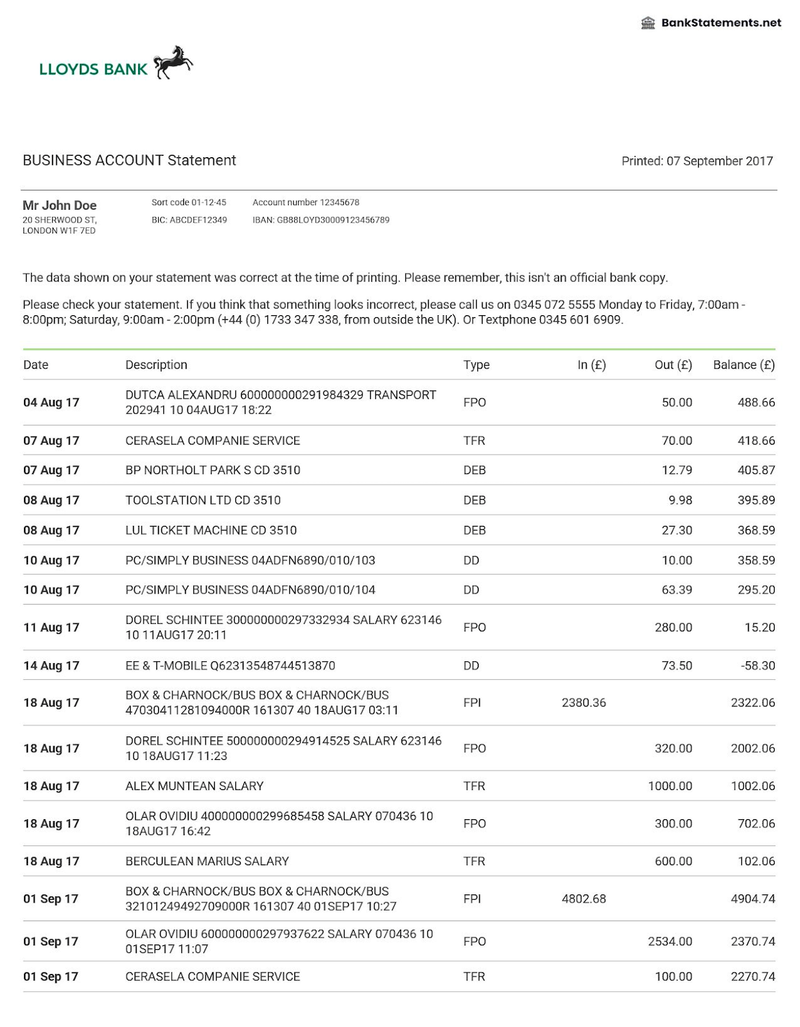
Manual reconciliation is a slow and tedious process. In addition to leading to the slow closing of books and consuming time that could be allocated to other tasks, it can have substantial velocity impacts on the business. Indeed, some businesses might not perform a purchased service, deliver purchased goods, or, in the case of payment companies, pay the beneficiary of a collected payment until the corresponding initial payment has been confirmed through its reconciliation. As such, slow reconciliations can significantly impact customer experience.
Because of how tedious this process is, manual reconciliation can also lead to frequent manual errors. These errors might lead to a mistaken understanding of cash at hand and confusion on the actual execution of sent or received payments. Once again, impacting both the business and the customer experience.
The more payments a company manages, the more manual reconciliation pains grow.
Management of payment issues
There are many reasons a payment can fail, including many external to your control.
As such, payment issues will undoubtedly happen. Such issues include failed payments, when your bank didn’t execute the payment for compliance, technical or other reasons, returned payment when you, for instance, sent a payment to an account that has been closed or failed direct debit when the account you are trying to debit has insufficient funds.
Another common payment challenge is failed instant payments, when the beneficiary bank doesn’t support this payment method.
While one could consider these payment issues as the exception rather than the norm and as something that can reasonably be manually managed, payment issues should actually be the main driver to automate payment operations.
First, as discussed above, even if your entire payment operations are 100% automated, issues will happen, and more issues will happen as the volume of payments increases. If not automated, the handling of these issues will consume significant time for payment operations teams. From identifying the issue to investigating it, identifying its root causes, and resolving it, a single issue generates a lot of downstream tasks.
Payment issues also create complex reconciliation workflows that can introduce errors. Let’s take the case of a payment return. When the originator bank executes the outgoing payment, it will appear on the account statement and most likely be reconciled.
But if the beneficiary bank then rejects this payment, it will be returned to the originating bank account in the form of another incoming payment. The company that sent the original payment needs to identify that the said incoming payment is a return of the sent payment, identify the sent payment, create a new incoming payment corresponding to the return in its systems, and reconcile it with the corresponding return transaction on its bank account.
Again, it is a tedious, time-consuming process if handled manually.
How to automate payment operations tasks
Automating these payment operations tasks obviously requires systems capable of performing the workflows described in this article:
- Turning payment information into payment files accepted by banks
- Reconciling initiated and expected payments with account statements
- Identifying and resolving payment issues and their downstream impacts
Such systems themselves aren’t trivial to build. They’re also insufficient to achieve end-to-end automation. Indeed, all payment operations involve information sent to and received from banks.
Automating payment operations, whether sending payments, reconciling them or managing payment issues, therefore, requires software connectivity to the banks’ systems to exchange the required information between companies and their banks automatically.
In addition, simply moving manual tasks from one system to another isn’t satisfactory. Payment operations are part of companies’ day-to-day operations. They are triggered by or driving companies’ operational workflows and business operations, which are for most companies managed in software systems such as ERPs or Core Banking Systems for companies in the financial services field.
As such, end-to-end automation of payment operations requires a complete integration of the payment operations systems into these internal systems.
Planning for the future: the state of European payment operations
Around the globe, the payment experience has been changing rapidly. Everything from an online checkout to real-time payments is expected to be frictionless while still offering the payee a variety of payment options. Embedded finance is on the rise and expected to exceed 7 trillion dollars by 2026, according to Bain & Company, and the global volume of instant payments is growing at a staggering 30% per year.
While consumers have benefitted the most, many B2B companies are examining their own payment operations. Even though companies may have an established payments workflow — the cycle of moving money through the business — it’s rife with inefficiencies.
At Mambu Payments, we wanted to better understand how finance leaders think about their payment operations. To do so, we ran a survey in partnership with OpinionWay and CFO Connect with 905 decision-makers, including titles such as CFOs, SVPs, VPs of accounting, controllers, and payment managers, from companies with 250 to 5,000 employees in either Germany, France and the UK.
Along with many findings, one thing was clear: payment operations have emerged as a business necessity. Without the right systems in place, companies face higher costs and a competitive disadvantage.
This section summarises the key takeaways from the results of the full report, "The state of European payment operations".
Companies face payment operations challenges
Across the board from the companies surveyed, most operational challenges were tied to fragmented systems and manual processes.
Surveyed companies used between 3-4 different payment methods, both to execute pay-outs and receive pay-ins. Companies had more than three different banks, with some also juggling third-party payment processors, payment service providers, and neobanks.
Even with several payment solutions in place, 68% of respondents say that more than 25% of tasks were handled manually. Payments are still received via cheques or cash, and the lack of integration between tools is one of the underlying issues. Another 29% are still using spreadsheets in their payment operations. All of this results in time lost per week, with internal resources spending time on manual work that could otherwise be spent on higher-value work.
Decision-makers understand the benefits of payment system upgrades
According to the people surveyed, 88% expect to benefit from improving their payment operations. While some are attempting to handle this internally, it puts pressure on IT, engineering, and product teams to solve the challenges themselves. This also takes away from the core focus of the business.
Decision-makers are well aware of the benefits of better payment operations, citing automation, faster bookkeeping, a better customer experience, and reduced errors at the top of the anticipated improvements. They can also increase visibility when moving away from disparate systems. Each of these would improve the bottom line, whether it’s faster payment collection from customers to internal costs saved by eliminating manual work.
Even while decision-makers know that implementing new systems can have its own challenges, they’re willing to make the investment. 89% plan to invest more than €50,000€ in upgrading payment operations, and 5% plan to invest more than €1,000,000. Most plan to make improvements within the next 18 months.
Investment in payment systems brings opportunities
The process to modernise payment operations and payment systems, while deemed urgent, is also viewed as complex. Even as payment executives understand the benefits, they know they need to integrate new systems with their existing payment infrastructure, often built on legacy systems with legacy interfaces. In the long run, such limitations can hinder growth, especially for companies that want to expand into a global market.
And while the people surveyed understand the urgency, other executives in the company may not. The investment may be deprioritised in the company’s budget or delayed due to the resources required to plan and transition to a new system.
Yet based on the results, we know that payment leaders plan to keep pushing for changes. They know that the company will significantly benefit in both the short and long term. They are exploring solutions that combine security, reliability, automation, and ease of use.
Mambu Payments helps companies modernise their payment systems by bringing together product, IT and finance teams. Thanks to its pre-built bank integrations, made available via a flexible API or file connectivity, Mambu Payments makes it easy to add new banks, payment methods and workflows to existing payment systems.
And via automated reconciliations, advanced user controls and approvals and a modern dashboard, Mambu Payments gives finance teams total control and visibility over their payment operations and all their bank accounts.

© Mambu 2026